
Blog · Innovation Units
DIU Reorganizes Around Three Lanes and a Cost-per-Kill Yardstick
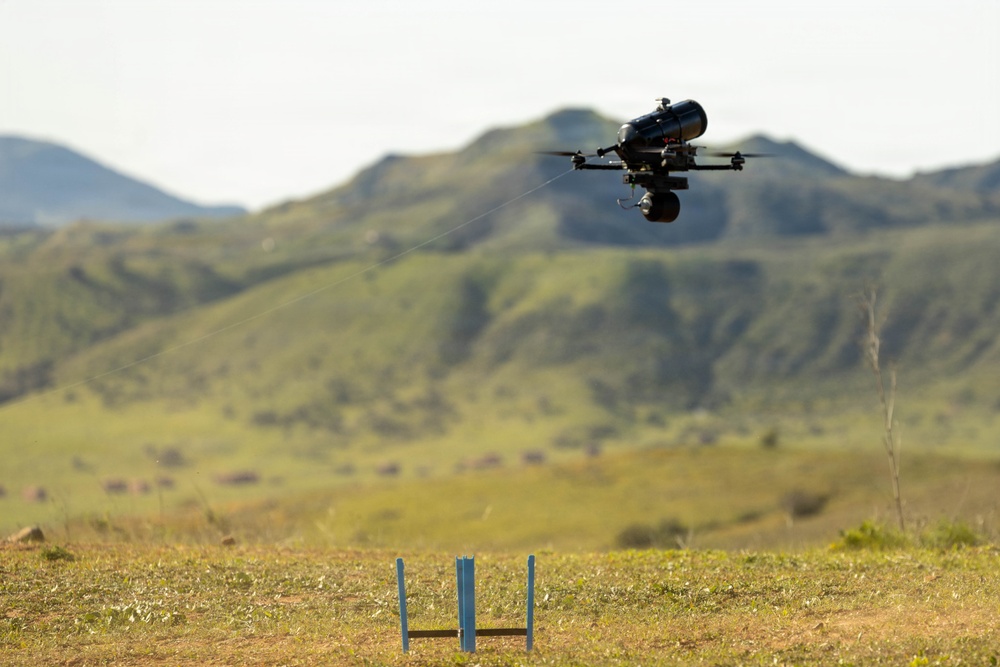
The Defense Innovation Unit has told industry how it intends to keep score. Under director Owen West, the unit's organizing measure is cost per kill, and West has said its job is to drive that number down. The structure behind that goal is now much simpler.
Seven portfolios become three
| Portfolio | What it covers |
|---|---|
| Drones and autonomous warfare | Unmanned and autonomous systems |
| Kill webs | Space, networks, sensors and command and control |
| 10x technologies | Advances that are not incremental |
Artificial intelligence lost its standalone portfolio. It now runs through all three.
What each lane covers
The seven portfolios being retired were artificial intelligence, autonomy, cyber, energy, human systems, space and emerging technology, and most of their work is being folded into the three new lanes. In DefenseScoop's interview, West described them this way:
- Drones and autonomous warfare takes all of DIU's unmanned platform work, the technologies that enable those platforms and the means to counter them.
- Kill webs builds on falling prices and wider choice in commercial space, alongside networks, sensors and command and control, with much closer work with the U.S. Space Force.
- 10x technologies takes on only work that helps the Secretary pivot the force quickly.
Each portfolio has an interim director, and West said DIU may hire from outside for an exceptional candidate.
How DIU will be measured
West has said the unit will report its performance on scorecards to Congress and to its board. The scorecards cover three things: speed to contract, capability fielded and cost reduction. DIU's budget is roughly $1 billion, and the Drone Dominance Program, about the same size, is purchasing low-cost attack drones at very large scale.
West became permanent director in January 2026, the same month the unit became a field activity of DOW.
Why cost per kill
West tied the metric to two outside pressures: about $250 billion of venture and other capital flowing into defense technology, and other nations moving fast into cheap, mass-produced weapons. He pointed to drone cost exchanges in Ukraine, Colombia, Azerbaijan and Thailand, and said the Secretary has tasked DIU with reducing cost per kill dramatically. DIU is a joint administrator of the $1 billion Drone Dominance Program and the primary commercial industry interface for the new Direct Reporting Portfolio Manager for Unmanned Systems, so the drones lane connects directly to the department's largest unmanned buying effort.
The scorecards will be posted online as well as shared with Congress and the board. West named speed to contracting, measured from an indication of interest to award, as one long-standing measure, with fielded capability and cost reduction to be added. He also told his workforce to trade travel costs for combat power: DIU had attended 40 conferences since the start of 2026 and spent about half a million dollars on travel, and travel approval now sits with the lowest business unit. UDC reads that as a signal that conference booths will be a thinner channel to DIU than its solicitations.
Reading the reorganization as a targeting map
For a company deciding where to point its business development, the new structure answers two questions at once. A product that sits squarely in one lane and can prove a lower cost per effect has an obvious home inside DIU. A product outside all three should not count on DIU carving out room for it.
UDC recommends that companies pursuing DIU test each offering against the three portfolios and against the three scorecard measures. If a pitch cannot say which lane it serves and how it lowers cost per effect, it is not ready for this audience.
Subscribe to Closing Rate for analysis like this, written for the people who capture and deliver DOW work.
First published in Closing Rate on July 15, 2026. Read the original.
Subscribe to Closing Rate