

Five Questions to Ask Before You Answer a CSO or Open Call
The first hour with a new solicitation decides more than most companies realize. Before anyone drafts a solution brief or cuts a pitch video, answer five questions.

Which Door Fits Your Product? Four Routes Into the Navy's Drone Business
Before building a package for the Navy's Maritime storefront, decide which of four routes fits the product. A five-step sequence covering the MUSV call, the sea demonstration and the options when no call fits.
Five Ways a Navy SBIR Phase I Proposal Loses, and the Fix for Each
The Navy judges each SBIR Phase I proposal on its own merits, so a loss usually traces to something the firm controlled. Five recurring errors, checked against the FY27 Release 1 instructions, and how to avoid them.
Component or End Item? Five Decisions That Set Your Section 805 Exposure
Section 805 exposure comes out of five decisions: who you contract with, whether an item is a component, whether it is on the USML, whether it is a drone, and whether a waiver is needed.

One Assembly, Four Rules: Tracing a Defense Electronics Build Through the 2027 China Restrictions
A notional motor controller, followed part by part through the four China-related rules converging on 2027: the processor, the board, the actuator magnet and the imported subcomponents, with the question each rule asks.
Eligible to Buy Is Not Safe to Field: What Each Supply-Chain Rule Leaves Unanswered
Section 889, FASCSA orders, CMMC, origin rules and named-entity bans each prove one narrow thing about a product. Here is what each proves, what it leaves open, and how to sort what the paperwork cannot.
Fill In Every Box: Decoding a Defense Notice Before You Respond
A defense notice answers some questions and leaves others blank. Decoding three generic notices line by line shows what each one settles, what it leaves open, and what to ask next.
Is Your Company Ready for a Purchase Card Sale? A Seller's Checklist
Small DOW purchases move on the government purchase card in days, not months. This checklist covers the limits, the labor question, payment setup and the moves that end a card relationship.
The 120-Day Problem: Sequencing JCP Certification Before the DLA Solicitation Drops
Bidding a manufactured part or repair usually means restricted drawings, and restricted DLA drawings mean JCP certification. Here is the order of work, the traps that return applications, and the limits of what certification buys.
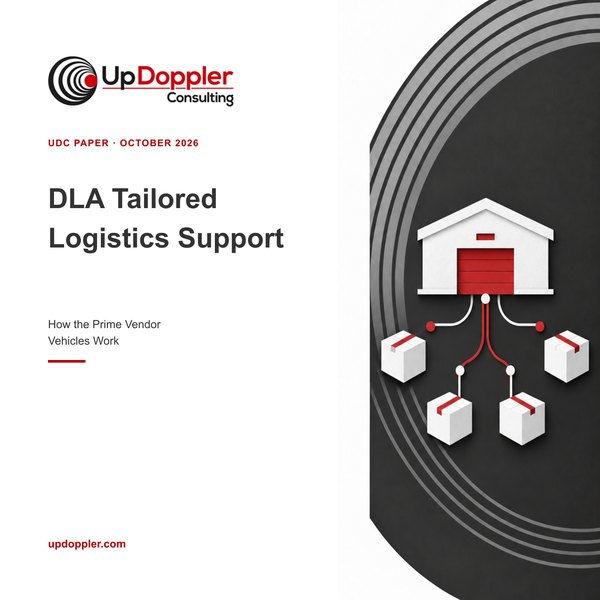
Follow the Order: How a DLA Prime Vendor Purchase Reaches the Manufacturer
A DLA Special Operational Equipment order passes through a unit, a finance office, a scope review, a competition among primes and a prime's own sourcing. Each handoff is a point where a product company wins or loses.
Rebuilding a Migrated SBA Profile: Six Steps in the Order That Matters
SBA built your Small Business Search profile from SAM.gov whether you asked or not. Six steps, taken in order, turn a bare record into one contracting officers and primes can use.

Plan the Second Award Before You Win the First
Companies celebrate the prototype award and discover later that nothing carries it into production. Each path to a DOW award has its own follow-on predicate, and the time to meet it is before work begins.
Screen a DLA Part Before You Quote It: A Four-Step Sequence
Before a shop buys tooling or prices a DLA part, four checks tell it whether it can compete now, needs the data first or must win source approval. Here is the sequence, step by step.
Three Mistakes Companies Make When They Pitch Rapid Acquisition Authority
Change 1 to DOW Manual 5000.78 opened a Service-level door to rapid acquisition authority. Three common mistakes still stop companies at the threshold: stale ceilings, a missing award route and no transition plan.

Six Funding Signals Defense Contractors Misread, and What Each One Means
An engineer says the money is there; the contracting officer says it is not. Both can be right. Six funding signals contractors routinely misread, and what Purpose, Time and Amount say each one means.

Two Sides of a Breach: Priced Compliance for Suppliers, an Unused Penalty for Attackers
A small supplier's CMMC Level 2 assessment is priced at $101,752. The sentencing enhancement for disrupting critical infrastructure was applied zero times in four fiscal years. UDC's case for rebalancing.

Hearing It Coming: Why Up Doppler Consulting Publishes Closing Rate
Closing Rate takes its name from sonar: a contact that is closing raises its pitch. The publication exists to help DOW contractors hear change coming before the solicitation drops.

Skills-Based Federal Contracting Act Clears Congress: Review Your Labor Categories Now
H.R. 5235 cleared the Senate without amendment and goes to the President. It bars unjustified education minimums for contractor personnel. Services contractors should rework degree-based labor categories now.

DIU's Low-Cost ISR Prize Challenge: Two Endurance Classes and No Runway Required
DIU's Low-Cost ISR prize challenge offers a $100 million prize and follow-on pool for inexpensive unmanned aircraft that operate without vulnerable airfields. Submissions were due 14 October.
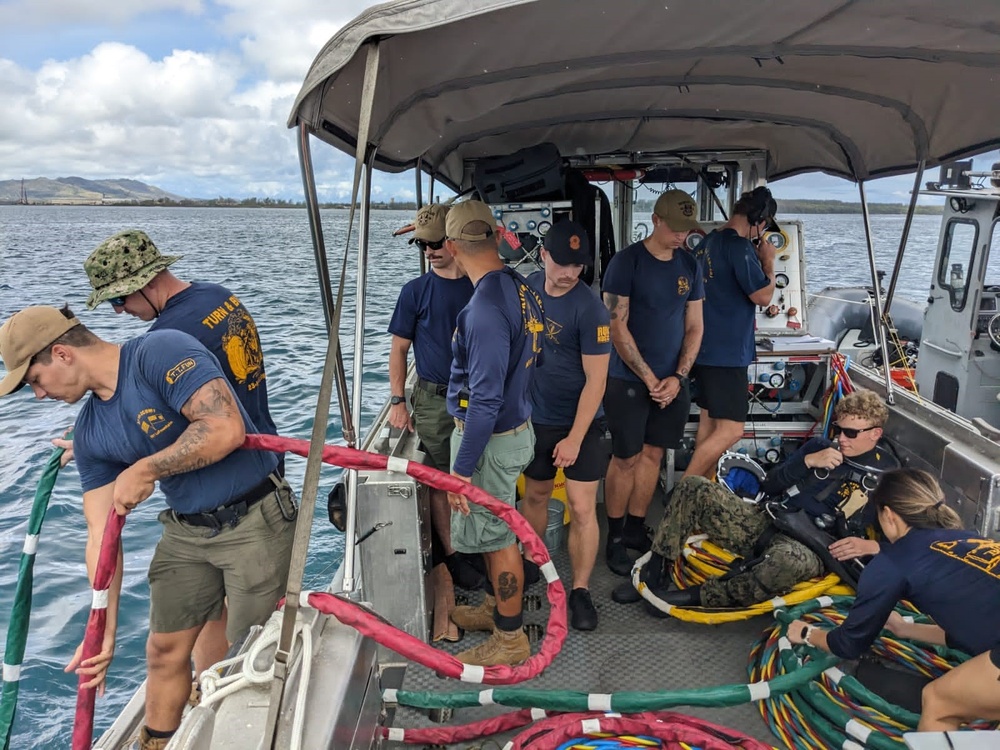
RASWDC Is Where the Navy Will Decide How Its Unmanned Systems Fight
The Navy has stood up a warfighting development center for robotic and autonomous systems. It pairs with DRPM RAS and will write the tactics and employment concepts that shape what the Navy buys.
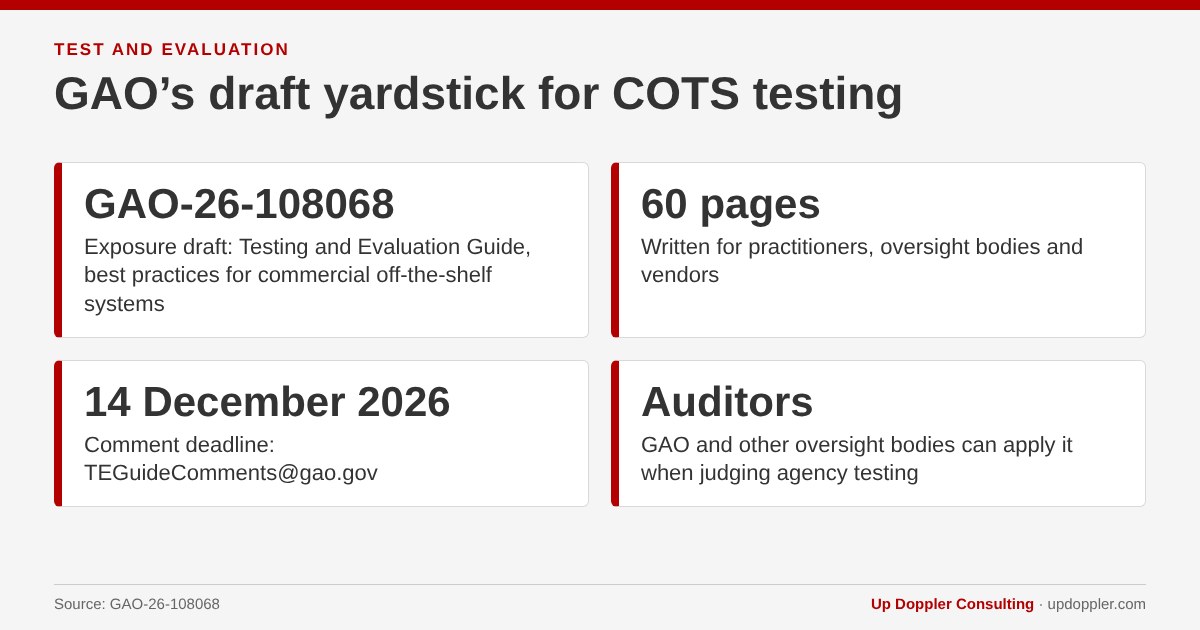
GAO Wants Input on the Yardstick It Will Use to Judge COTS Testing
GAO's exposure draft on testing commercial off-the-shelf systems will become the measure auditors apply to agency test programs. Comments are open through 14 December 2026.
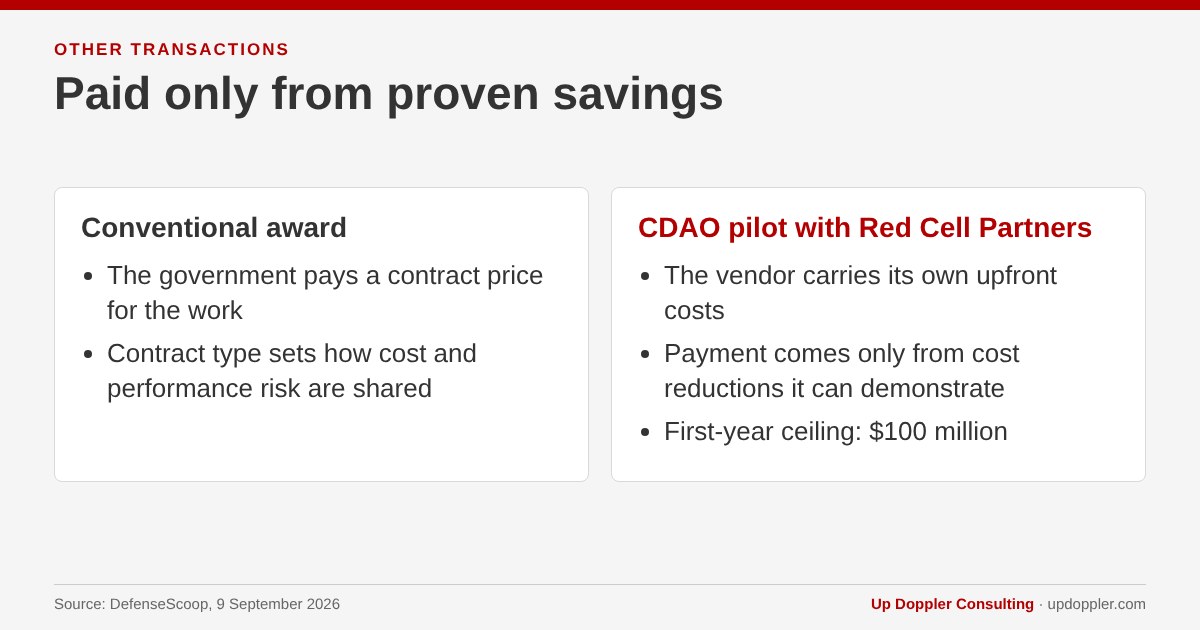
Paid Only From Proven Savings: The CDAO Pilot With Red Cell Partners
The CDAO has signed an other transaction with Red Cell Partners under which the vendor funds its own work and is paid only from savings it can prove. The hard part is measurement.

DOW Instruction 8430.01 Turns Software Reuse Into an Assigned Duty
Department of War Instruction 8430.01, Accelerated Mission Software, took effect on 8 September. It makes software reuse a policy with named owners. Software vendors should read the responsibilities section.

The Labor Gap Behind Production Capacity: Up to 400,000 Trades Jobs Unfilled
DOW testified that up to 400,000 skilled trades jobs across the defense industrial base sit unfilled, possibly 2.5 million by 2030. Companies proposing to scale production need a workforce answer.
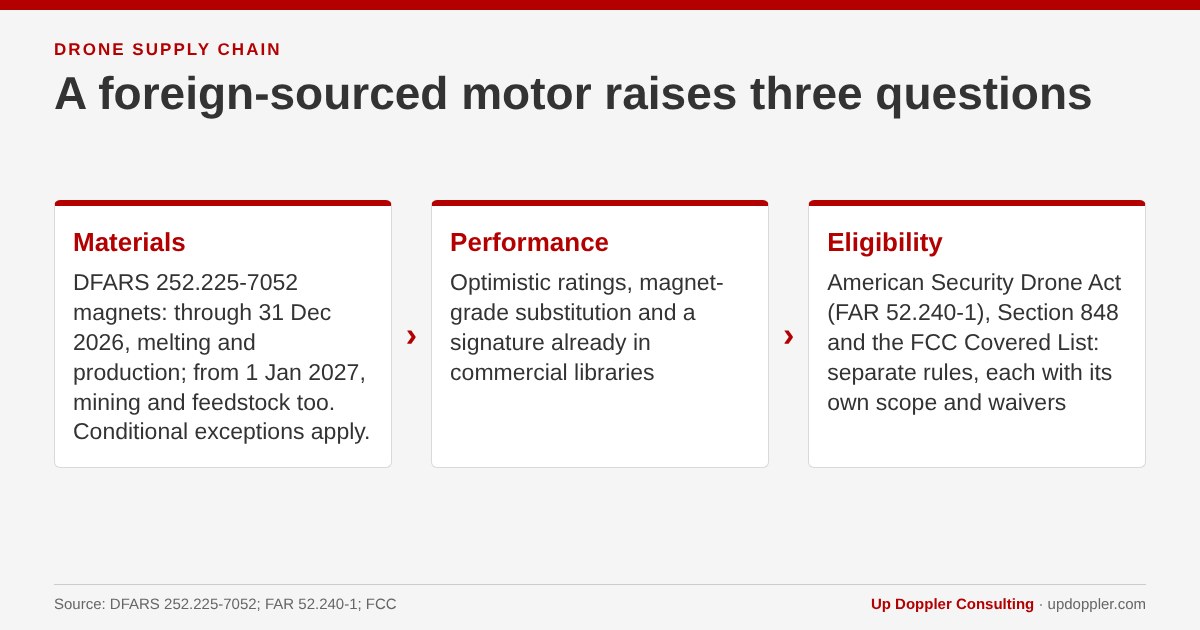
Materials, Performance, Eligibility: Sorting Out a Foreign-Sourced Drone Motor
SiFly raised $20 million to build its Q12 with motors still sourced from China. That is three problems, not one: magnet rules, motor behavior, and eligibility for federal sale.

GCE 2040 Puts Counter-Drone Decisions in the Squad, and That Makes It a Workload Problem
The Marine Corps GCE 2040 framework sends layered counter-drone capability to the squad while insisting the force stay human-centric. That combination defines a human systems integration requirement with a fifteen-year runway.
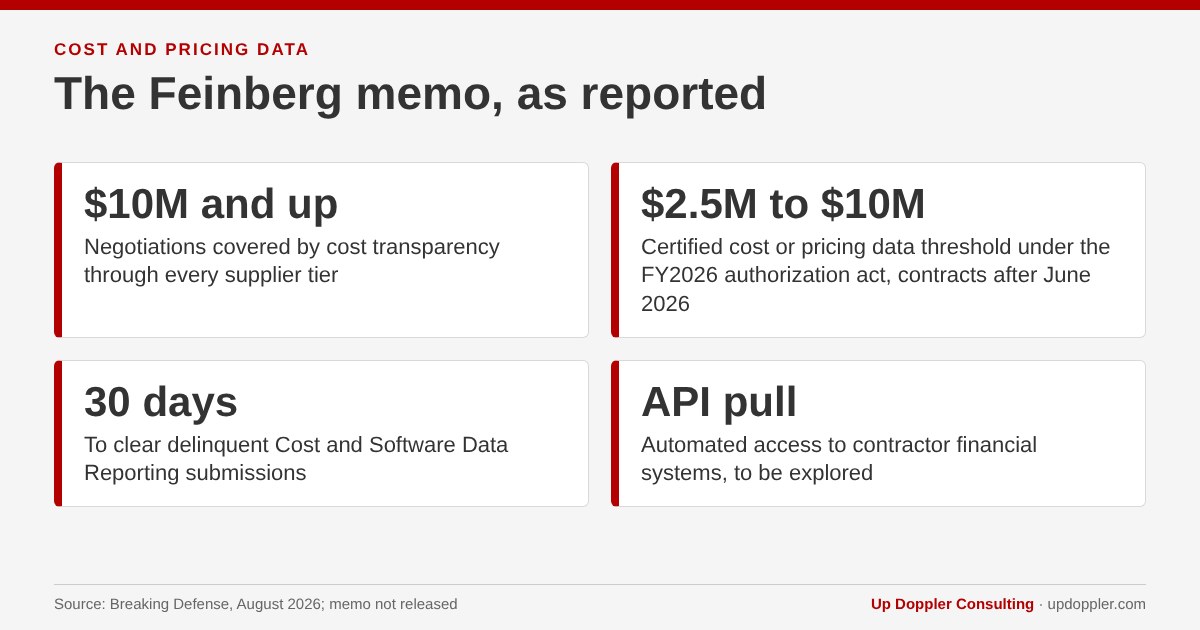
Feinberg Memo Seeks Cost Visibility Below the Prime on Negotiations of $10 Million and Up
A memo signed by Deputy Secretary Steve Feinberg, reported but not released, asks for cost transparency through every supplier tier on negotiations of $10 million or more.

Task Force Falcon Strike and the Operational Demand Behind Attack Drone Buying
CENTCOM has launched Task Force Falcon Strike, the first multinational attack drone task force. Its predecessor's record explains why attack drone procurement is accelerating, and where the demand originates.

NDAA-Compliant and Still Calling China: The Lesson of the K3 Scout Cameras
Royal Navy K3 Scout cameras with Chinese-made components were beaconing to China, and the builder says they were NDAA-compliant. Here is why the label missed it and what to test instead.
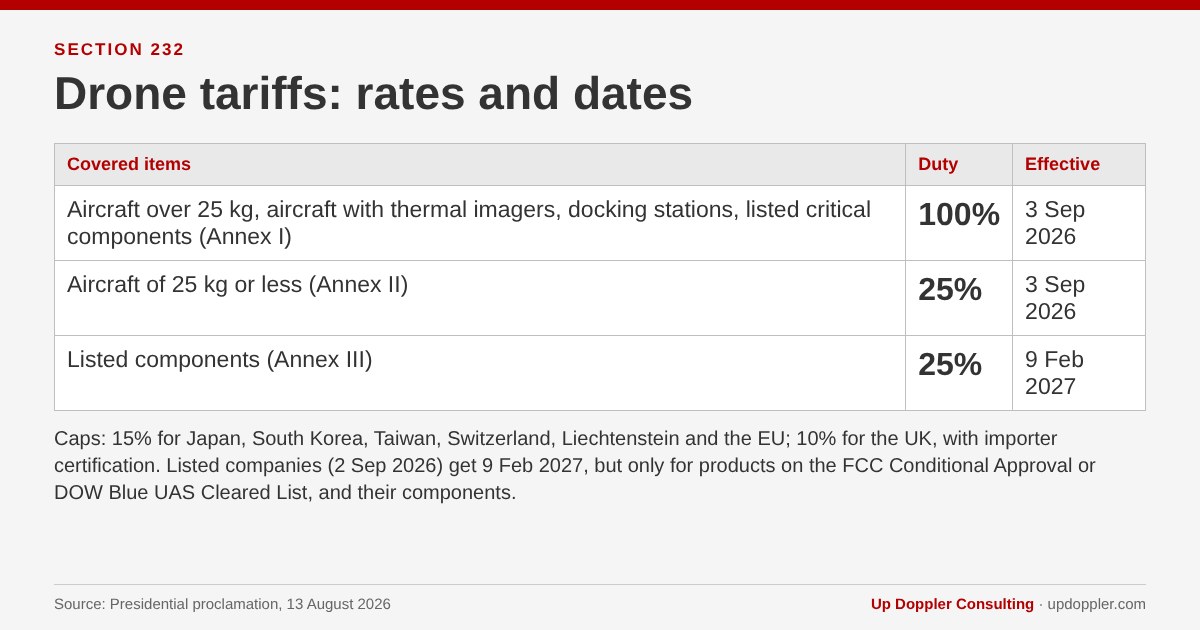
Section 232 Drone Tariffs: The Rates, the Dates and the Country Caps
A 13 August presidential proclamation puts duties of 25 to 100 percent on imported drones and components, with lower caps for allied countries and a later component duty in February 2027.

A Naval Systems Command Deputy Commander on Acquisition Reform, Free in California, Maryland
On 21 October, a naval systems command deputy commander speaks on acquisition reform at USM Southern Maryland. The talk is free, and it carries buying intent long before any solicitation does.

Indian Head's Forensic Lab Challenge Buys the Design, Not the Building
Expeditionary Exploitation Unit ONE wants planning and design documentation for a 24,300-square-foot forensic lab. The scope, the four gaps behind it, and the teams best placed to win.
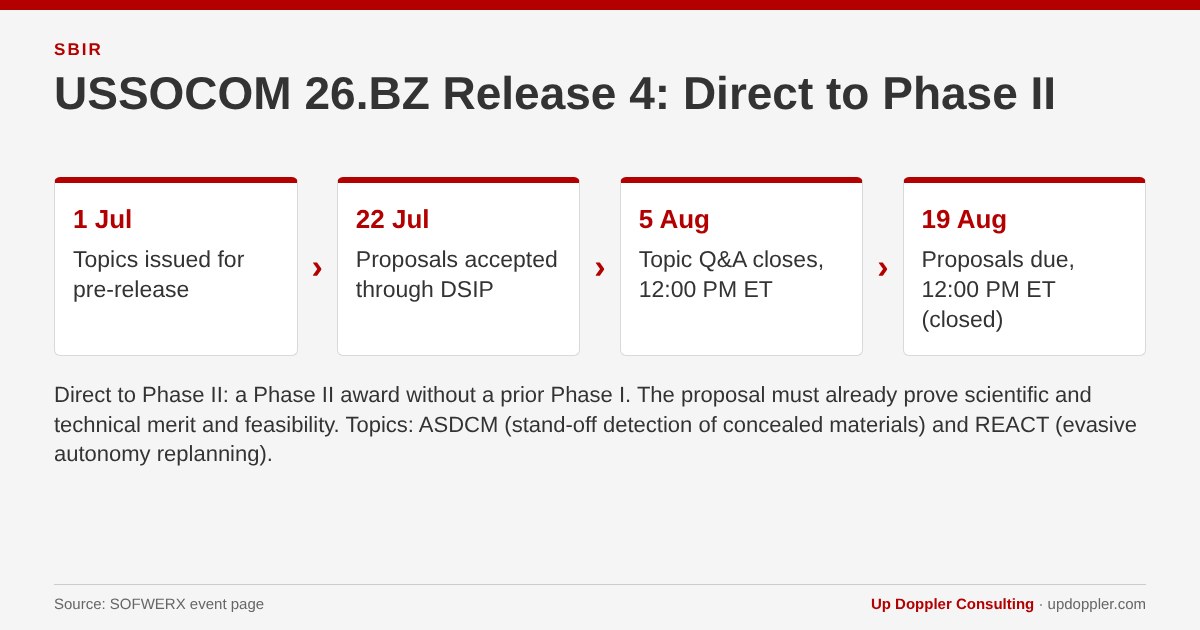
Skipping Phase I: What USSOCOM's Two Direct to Phase II Topics Ask of a Small Business
USSOCOM has two Direct to Phase II SBIR topics open until noon Eastern on 19 August. A company with no Phase I award can compete, if its proposal proves the feasibility work is finished.
The Cyber Force question came one vote short
The Senate Armed Services Committee rejected an amendment to the FY2027 National Defense Authorization Act that would have established a Cyber Force as an armed

SOF RACER: What SOCOM's New Consortium Gives a Company, and What It Does Not
SOCOM's SOF RACER consortium is a free, standing on-ramp for commercial and defense firms across twelve areas of interest. Membership puts you where requirements appear; it does not win them.
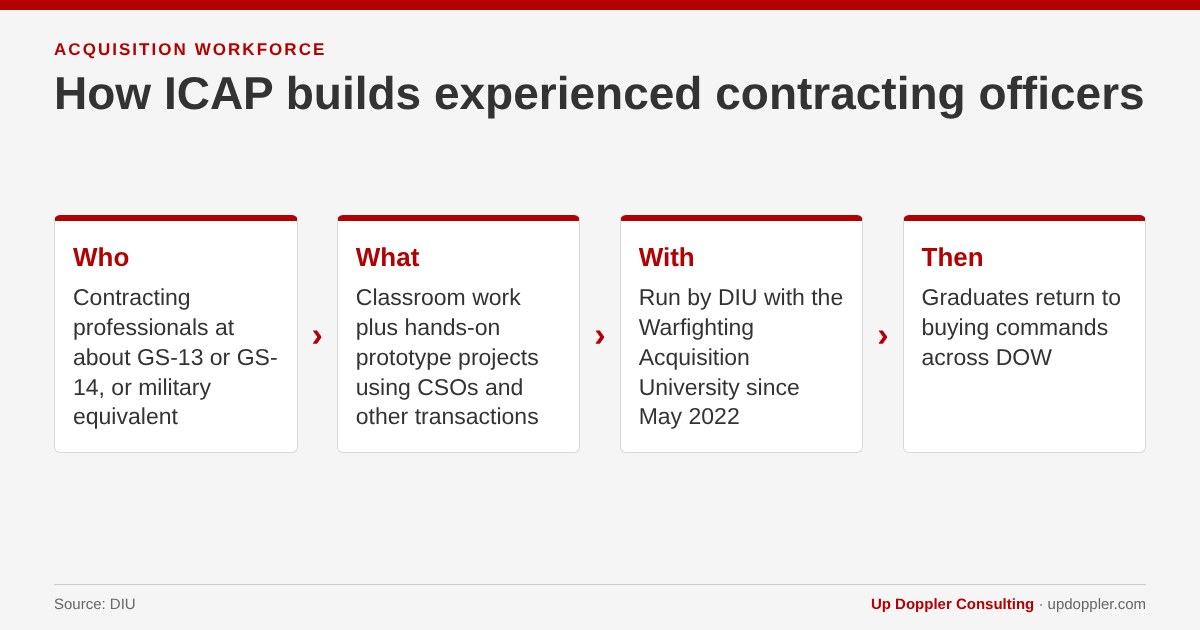
DIU's Bet on Acquisition Reform Runs Through Contracting Officers, Not Regulations
DIU's Immersive Commercial Acquisition Program trains mid-career contracting professionals to run commercial solutions openings and other transactions, then sends them back to buying commands across DOW.
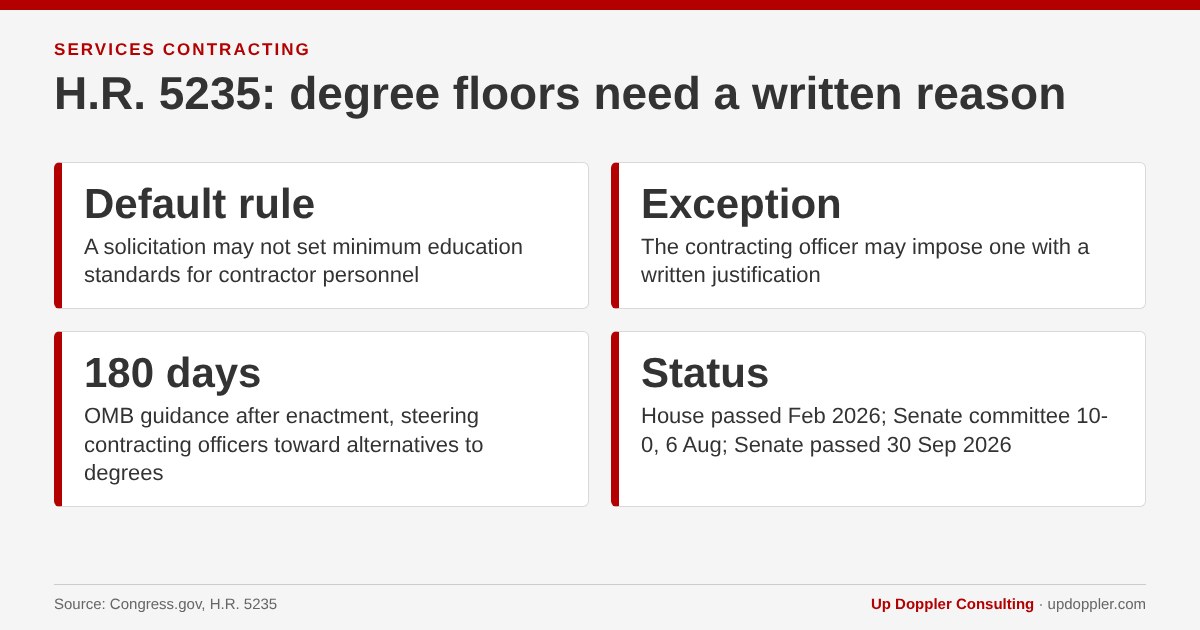
H.R. 5235 Would Make Contracting Officers Justify Degree Requirements in Writing
The Skills-Based Federal Contracting Act passed the House in February and cleared a Senate committee 10 to 0 in August. Services contractors built around degree-based labor categories should prepare now.
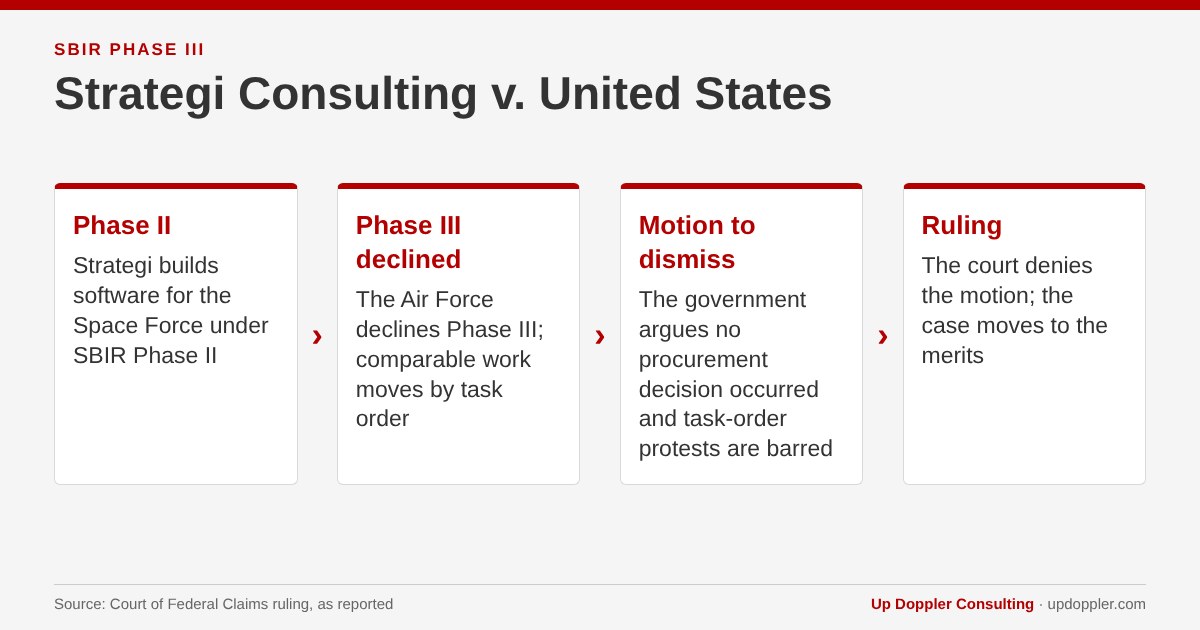
Strategi Consulting v. United States: A Lost SBIR Phase III Can Be Challenged
The Court of Federal Claims will hear Strategi Consulting's challenge after the Air Force sent follow-on work from its Space Force SBIR Phase II to another program by task order.

The Office of Strategic Capital Builds a Financing Line for Drone Component Makers
The Office of Strategic Capital's $820 million commitment to Performance Drone Works is one of several aimed at drone component bottlenecks, giving component makers a route to capital without a contract.

DIU's SWAP Solicitation Pays for Integration That Already Exists
DIU's SWAP solicitation wants mature unmanned surface vessels already integrated with at least two mature aerial drones carrying a combined 2 kg kinetic payload, ready for test within 120 days.

How a Drone Gets onto the Blue List Now That DCMA Runs It
The Blue List moved from DIU to DCMA, which has now defined the path on: a checklist packet, a recognized assessor and an NDAA compliance report. Steps, tiers and implications.
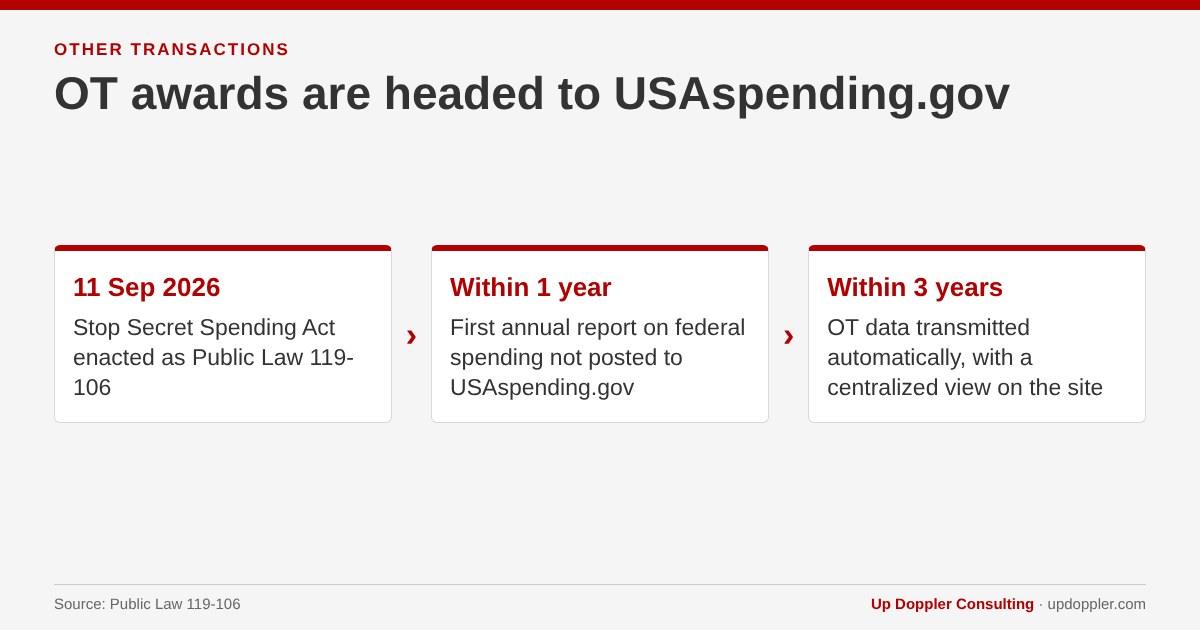
Other Transaction Awards Are Headed to USAspending.gov
The Stop Secret Spending Act became Public Law 119-106 in September, putting other transaction awards on USAspending.gov within three years. Three other procurement bills moved the same week in July.

A Reusable Strike Drone Joins the Drone Dominance Program
DOW has opened a reusable bomber class in the Drone Dominance Program. Here are the thresholds, the schedule to the October Gauntlet, and why reuse changes the cost math.

APFIT's Fiscal 2027 Cohort Will Reward Products That Get Cheaper at Scale
The DOW chief technology officer says the first fiscal 2027 APFIT cohort will favor unmanned, autonomous and AI systems that can be made cheaply at scale. Here is how the program selects and what to prepare.
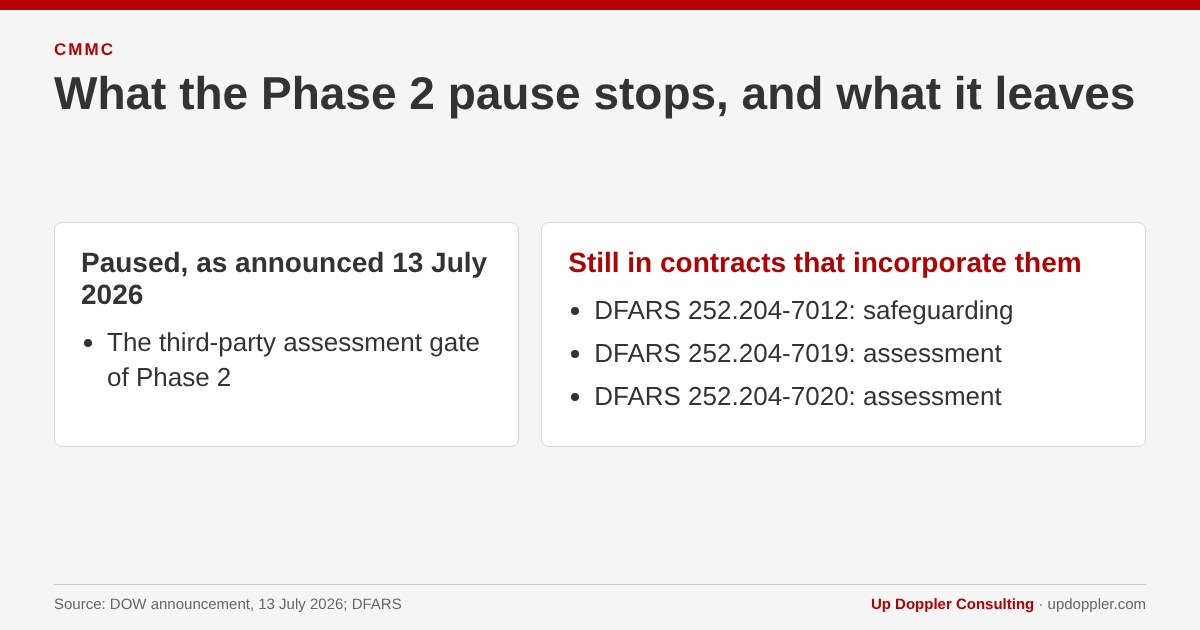
What the CMMC Phase 2 Pause Leaves in Place for Contractors
The pause on CMMC Phase 2 stops third-party certification for now. It does not touch DFARS 252.204-7012, -7019 or -7020, and specialists expect assessments to return in some form.

Does a Marketplace Still Answer to Its Solicitation? Two MUSV Lawsuits Will Tell
Blue Water Autonomy and Saildrone have each sued the Navy over their removal from the Medium Unmanned Surface Vessel Marketplace. The cases test how far a fast-buying model can stray from its own solicitation.

DIU Reorganizes Around Three Lanes and a Cost-per-Kill Yardstick
DIU now runs three portfolios instead of seven, measures itself by cost per kill, and will report scorecards to Congress and its board. Companies should check their product against the new lanes.

The Triple Shield of Digital Defense: Network Obfuscation, Anonymization, and Encryption
In today’s interconnected digital era, safeguarding diverse assets—ranging from vast data centers to personal cell phones, and now extending to robotic and autonomous vehicles—has become

The Bright Future of Aviation: LED Lighting Systems in Aircraft Maintenance
In the fast-paced world of aviation, every component, no matter how seemingly small, plays a critical role in ensuring aircraft safety, efficiency, and overall performance.

Review of DefenseOne Article on Lessons from Air Force’s Red Flag Wargame
1. Red Flag and Navy Integration: The U.S. Air Force’s Red Flag wargame, which spanned from July 17 to August 4 and extended from Nellis