
Blog · Marine Corps
GCE 2040 Puts Counter-Drone Decisions in the Squad, and That Makes It a Workload Problem
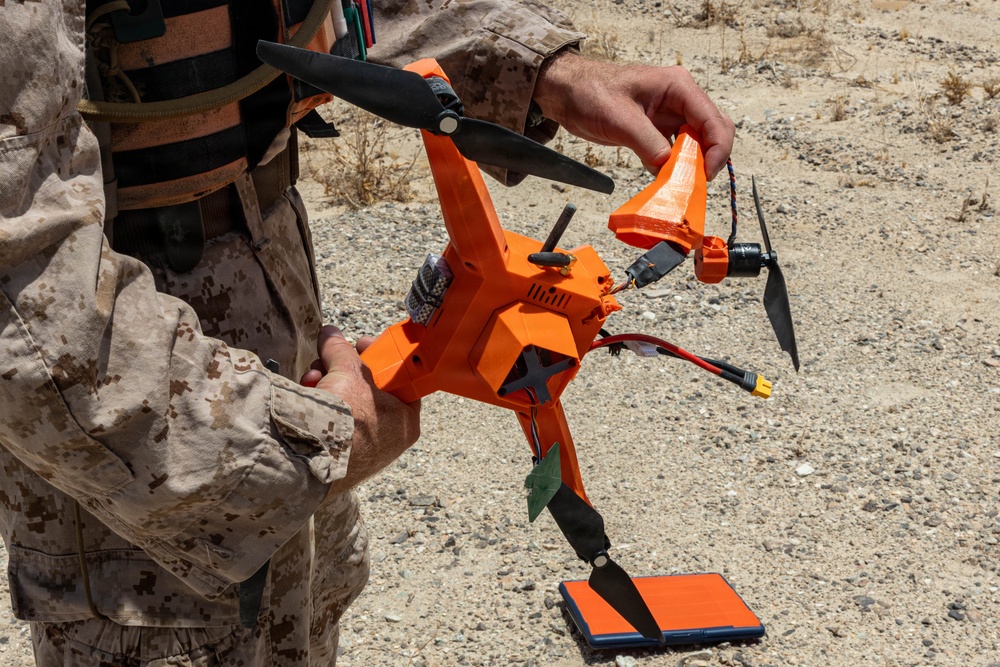
Read the Marine Corps' new Ground Combat Element 2040 framework for its hardware and you will find counter-drone kits, multi-projectile rounds and longer-range fires. Read it for its stated priorities and a different requirement appears. The 23-page document commits the GCE to artificial intelligence, autonomous systems and resilient command and control, and then declares that the force will stay "fundamentally human-centric," as SOFX reported. A concept full of autonomy that also keeps the Marine at the center has, in effect, written a human systems integration requirement and given it fifteen years to mature.
What the framework commits to
The document names the evolving drone threat as the most significant risk to ground maneuver. Its answer is layered counter-small UAS capability, both active and passive, extended down to the squad. Lt. Gen. Jay M. Bargeron, deputy commandant for plans, policies and operations, told reporters that the ability of the lowest-echelon units to defend themselves against one-way attack systems is "one of the biggest holes in our swing."
The near-term items are specific:
- Organic Counter-small UAS kits to detect and defeat drones.
- 400,000 anti-drone rounds for the M4 carbine and M27 Infantry Automatic Rifle, each round separating into five projectiles after firing.
- Longer-range precision strike for rifle squads, with a goal of engaging targets at about 20 kilometers, per SOFX.
The framework is laid out in three phases, per the same report: 2026–2030 on drones and ongoing modernization, 2031–2035 on expanding AI, autonomous systems and unmanned formations, and 2036–2040 on widespread human-machine teaming, AI-enabled command and control and dispersed formations.
Why the human is the hard part
A squad that must detect, identify and defeat a drone under time pressure, while working beside autonomous teammates and carrying new strike tasks, faces a decision-load problem before it faces an equipment problem. Three questions have to be settled first:
- What is the Marine expected to decide?
- What does the machine do without asking?
- How does control pass between the two, and how fast?
Those answers belong in the requirement. When a program treats them as paperwork, they surface during operational test instead, where finding them costs the most.
What this means for companies
The phased plan gives this work a long planning horizon, though actual opportunities depend on budgets, requirements and solicitations, and the human-machine teaming phase depends on the decision architecture being right in the earlier ones. UDC recommends that companies offering squad-level counter-drone or autonomy products come prepared to show how their system divides work with the Marine, not only what it detects or defeats. A product that adds a task to an already loaded squad is a harder sell than one that takes a task away.
Closing Rate reads service force-design documents for the requirements underneath them. Subscribe to get that analysis as new guidance appears.
First published in Closing Rate on August 30, 2026. Read the original.
Subscribe to Closing Rate