
Blog · Unmanned Systems
A Reusable Strike Drone Joins the Drone Dominance Program
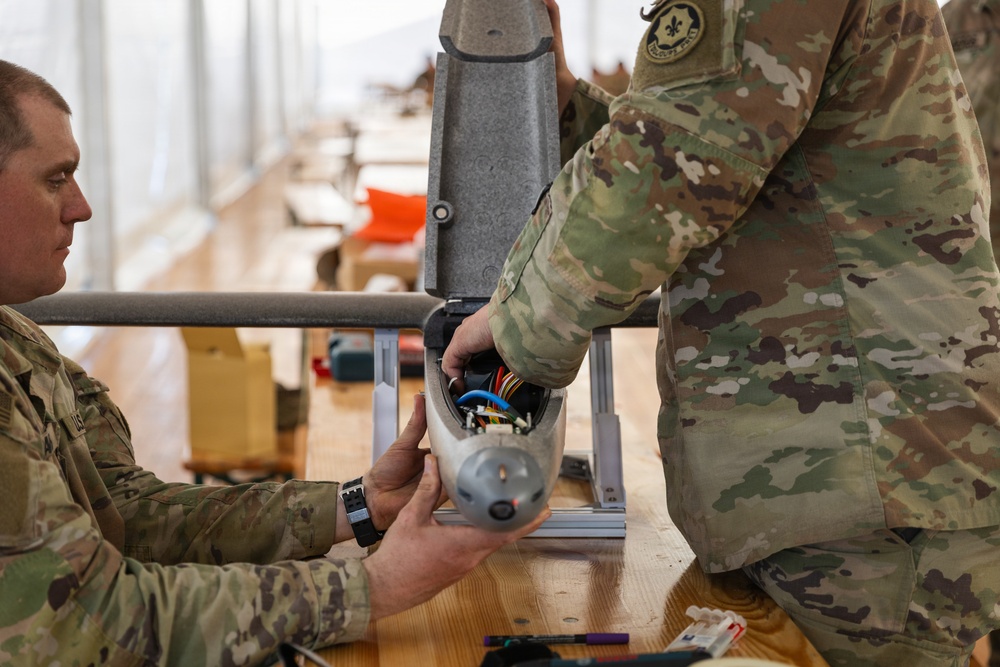
Until now the Drone Dominance Program has bought one-way attack munitions: aircraft expended on the strike they fly. DOW has opened a second class that comes home. It is a small unmanned aircraft built to carry several warheads, release them, return and fly again. The request for solutions calls it a bomber or dropper.
The thresholds in the request
- Portability: carried by one person or moved in a light vehicle.
- Range: a mission range of 15 to 30 kilometers.
- Weight: 55 pounds or less at takeoff, payload not counted.
- Payload: at least 8 kilograms.
- Conditions: all weather and all lighting.
- Resilience: communications and navigation that hold up against jamming.
Schedule and money
Industry responses closed 5 August 2026. Vendors that qualified were to move on to the Gauntlet, an evaluation event announced for October. The program plans roughly $32 million in initial prototype awards and anticipates up to 1,200 prototype systems.
Why a reusable class changes the math
A munition spent on its first flight puts its entire price into a single effect. An aircraft that returns divides its price across every strike it completes. That is the cost-per-effect argument DOW has made all summer, and this class writes it into a requirement.
For a bidder the implication is direct: the case for a reusable design rests on how many missions the aircraft survives, not on unit price alone. UDC recommends that firms entering this class build their response around demonstrated reuse under the stated conditions, jamming above all, because a reusable aircraft that does not come back delivers the economics of a one-way munition at a higher price.
Subscribe to Closing Rate for short, sourced analysis of DOW acquisition news and what it means for the companies that compete for the work.
First published in Closing Rate on July 22, 2026. Read the original.
Subscribe to Closing Rate