
Blog · SBIR and STTR
Strategi Consulting v. United States: A Lost SBIR Phase III Can Be Challenged
For a small business that carries a technology through SBIR Phase II, the worst outcome is not a rejected Phase III. It is watching the follow-on work go somewhere else with no forum in which to question it. A ruling in Strategi Consulting LLC v. United States says that forum exists.
The facts
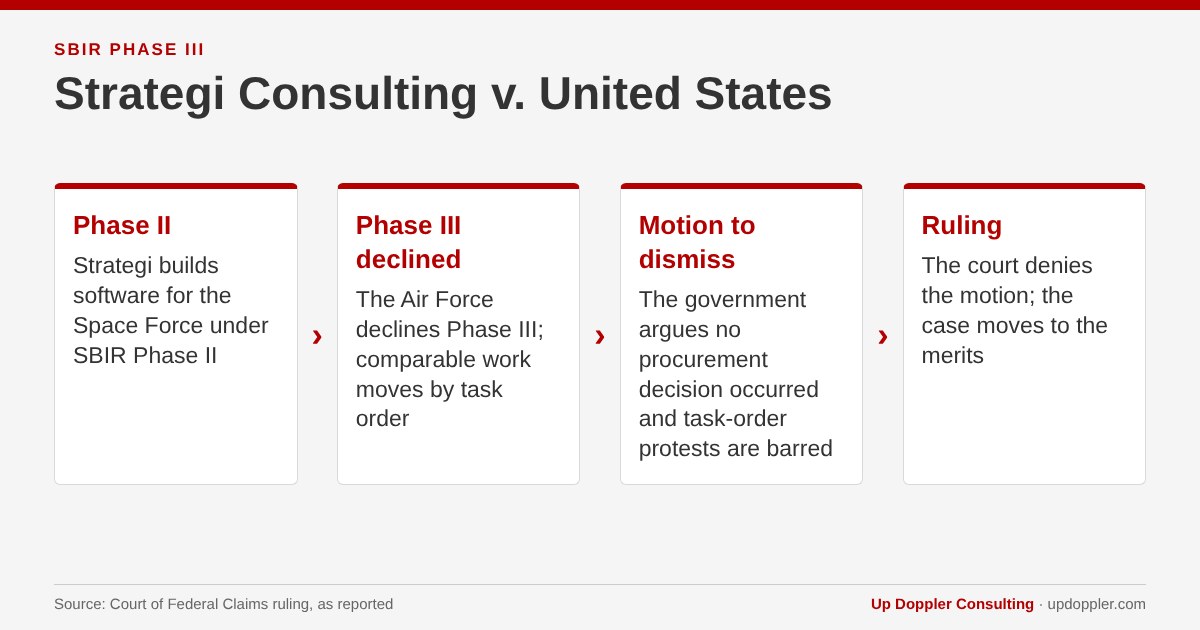
Strategi completed SBIR Phase II work building software for the Space Force. The Air Force then declined to award a Phase III contract and routed comparable work to a different program by task order. Strategi went to the Court of Federal Claims.
The government's position
The government moved to dismiss for lack of jurisdiction on two grounds:
- no procurement decision had taken place, so there was nothing to protest; and
- protests of task orders are barred.
The court denied the motion. It did not accept that either argument removed the dispute from its authority, and the case now moves to the merits.
What the ruling settles and what it does not
The decision does not find that Strategi was treated unfairly. That question remains open. What it establishes is narrower and still important: when an agency sends Phase III work elsewhere, the substance of that choice can be reviewed, and the contract vehicle used to move the work does not by itself shield it.
UDC recommends that SBIR Phase II performers keep a clear record of their technology, deliverables and any signals of follow-on intent, and watch for task orders under other programs that cover the same capability. If the merits decision goes Strategi's way, that record will matter.
Closing Rate tracks moves like this one and explains what they change for companies selling to DOW. Subscribe to get the analysis as it publishes.
First published in Closing Rate on August 4, 2026. Read the original.
Subscribe to Closing Rate