
Blog · Industrial Base
The Labor Gap Behind Production Capacity: Up to 400,000 Trades Jobs Unfilled
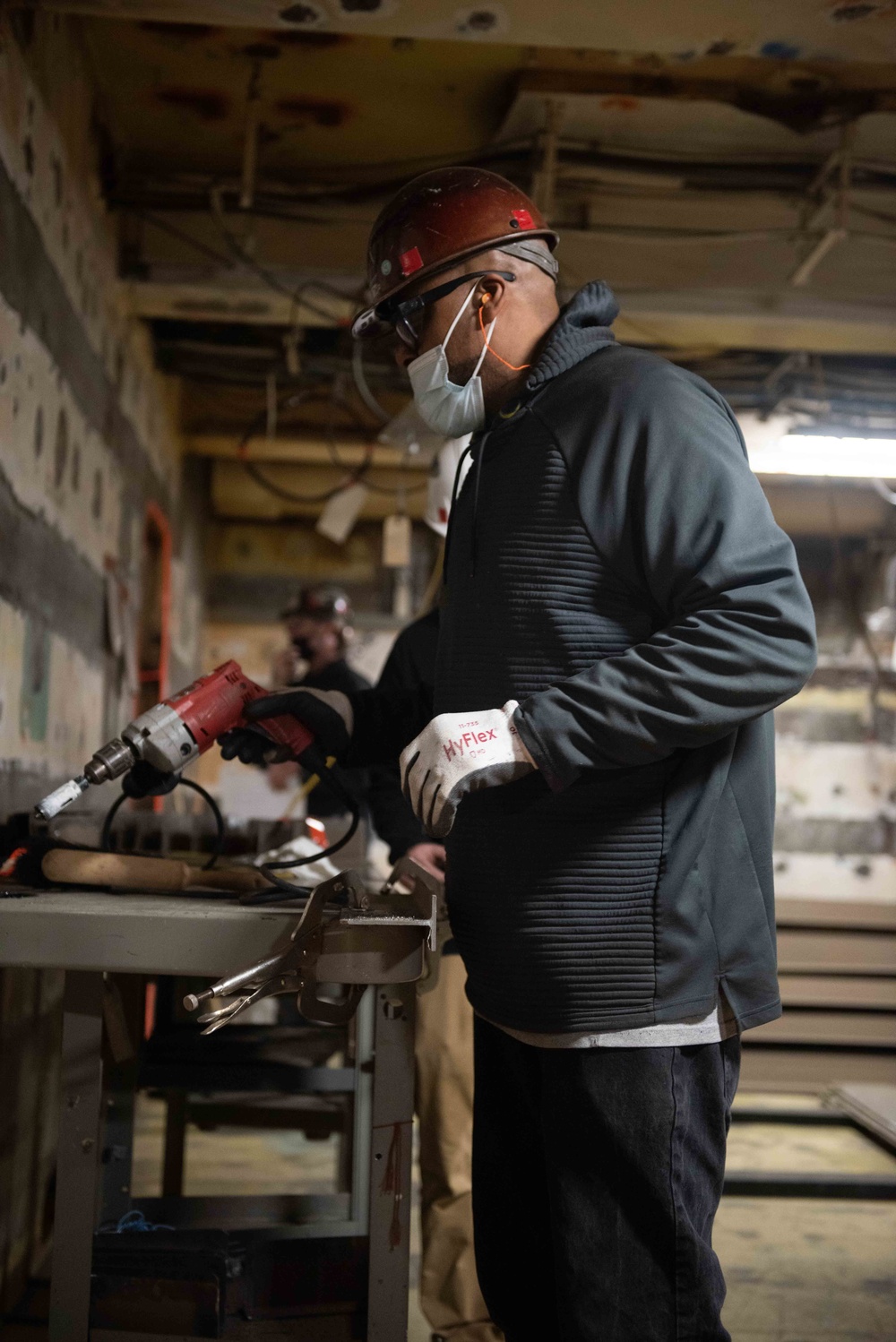
DOW's head of industrial base policy put a number on the labor shortage in written testimony at a 4 September field hearing on the industrial base and workforce development: as many as 400,000 skilled trades jobs across the defense industrial base are unfilled today, and the gap could reach 2.5 million by 2030.
Who testified
The Defense Subcommittee of House Appropriations held the hearing on Friday, 4 September at the College of the Canyons Performing Arts Center in Santa Clarita, California. The witness list was built to cover the whole problem. The first panel paired a shipbuilder, Eric Chewning, Executive Vice President for Maritime Systems and Corporate Strategy at Huntington Ingalls Industries, with an educator, Dr. Michael Reed, President of the Pennsylvania College of Technology. The second panel was the Honorable Michael Cadenazzi, Assistant Secretary of War for Industrial Base Policy, whose written statement carried the 400,000 and 2.5 million figures. All three written statements are posted with the hearing record.
What Congress heard
The chair of the House Appropriations Subcommittee on Defense rejected the idea that materials, sub-tier suppliers and skilled workers can be taken for granted. He pointed to an estimate that 320,000 new welders will be needed by 2029, an estimate that predates the data center construction boom.
DOW described one response: $10 million in grant funding for a workforce awareness program. The money pays for more than 9,000 scholarships and links job seekers to apprenticeships and credentials. The effort operates in three states and is planned to expand nationwide.
What it means for proposals
In Congress, production capacity has become a workforce question as much as a money question. Any company proposing to expand manufacturing should be ready to say where its welders, machinists and technicians will come from. UDC recommends answering that question in the proposal itself, with a concrete plan to recruit, train and keep the trades the work requires, rather than waiting for the question to arrive.
The panel itself is a guide to what a credible answer looks like: an employer who needs the trades, a school that produces them and the department that funds the demand. A proposal that names its own versions of all three, the local training partner, the apprenticeship or credential pathway and the hiring plan tied to the contract's ramp, is answering the question this hearing put on the record.
Subscribe to Closing Rate for short, sourced analysis of DOW acquisition news and what it means for the companies that compete for the work.
First published in Closing Rate on September 4, 2026. Read the original.
Subscribe to Closing Rate